
The Architecture of Belonging

There is a quiet form of loneliness that is becoming more visible. Not always dramatic. Not always spoken.

But felt.

It is the experience of having once been deeply woven into the fabric of life— raising families, building communities, hosting gatherings, contributing, caring—and then, slowly, finding that the structures that once held that connection are no longer there in the same way.

This is not simply about being alone. It is about what happens when the structures that once held connection begin to fall away.

Belonging is not only a feeling—it is something shaped by how we design life together.

Much of the way we have organized modern life has been built around stages and roles.

We move through them:

Child. Student.
Worker.
Parent.
Provider.

And for a time, these roles naturally create connection. They bring us into relationship with others—through school, work, family, shared responsibilities. But over time, something shifts.

Children grow.
Work ends.
Communities disperse.

And what can quietly fall away is not only activity— but the structure that holds relationship itself.

We may still be surrounded by people. Still present in family life. Still contributing in meaningful ways.

And yet…something can feel missing.

Not being needed in the same way.
Not being seen in the same way.
Not being known beyond what we do.

This is a deeper kind of loneliness. Not simply isolation.

But a loss of place within the web of relationship.

I’ve been thinking about other ways of living lately—past and present—where this web is held differently.

Where life is not divided as sharply by age or role. Where children and elders remain in close relationship.

Where value is not tied only to productivity, but to presence, memory, and lived experience. In these ways of living, belonging does not end when a role changes.

It deepens.

Elders are not outside the flow of life. They are part of its continuity.

In our current structures, we are still learning how to hold this. There are many beautiful efforts—community programs, senior centers, gatherings designed to support connection. These are meaningful and important.

And yet, for many, they do not fully meet the deeper need. Because belonging is not only about activity.

It is about relationships that feels alive, mutual, and meaningful.

Perhaps we need to ask new questions.

  • What would it look like to create spaces that are not separated by age, but shared across generations? Where children and elders are in regular relationship—not as visitors, but as part of everyday life.

  • What would it look like for places of gathering to become community hubs, where people of different ages and stages bring what they have and receive what they need?

In some parts of the world, we see glimpses of this. Spaces where childcare and elder care are woven together. Where stories, presence, and care move in both directions. Where value is not lost as capacity changes—but simply expressed differently.

These are not large, sweeping solutions. They are small shifts in how we design life together.

They ask us to move from:

  • separation → toward relationship

  • function → toward presence

  • independence → toward interconnection

And they ask something of us, personally. To notice where we can remain in relationship, rather than withdraw.

To take time to truly see one another—not only for what we do, but for who we are. To create, even in small ways, spaces where connection is ongoing, not occasional.

This is not always easy.

Our lives are busy. Our systems are structured in certain ways. And change takes time.

But something in us already knows the direction. We feel it in moments of real connection.

In conversations that go a little deeper. In time spent across generations. In the quiet recognition of shared humanity.

And we feel it in the absence, too. In the places where something important is missing.

Ethical Grounding invites us to stay with this awareness.

Not to rush to fix it.

But to begin to see clearly:

  • What sustains belonging?

  • What allows relationship to continue across time?

  • What helps us remain part of the human and living world, even as life changes?

We may not yet have fully formed answers. But we are beginning to imagine them.

And perhaps this is where something new begins. Not in large systems alone— but in the small, intentional ways we choose to stay connected.

To ourselves. To one another. To the web of life that holds us.

I saw this in my own life as I cared for my mother. There was a longing she carried— for connection, for presence, for her grandchildren to visit more often. And I knew… they loved her. But love, on its own, did not always become presence.

Something in the structure of our lives made that love harder to live out in the ways she needed. There was a quiet grief she held— a sense of losing her place, even while still surrounded by family.

Perhaps many of us are now standing in this in-between place— learning from what we witnessed in our parents, and wondering how it might be different for us.

What would it look like to stay in relationship across time— not only in love, but in presence?

Because belonging is not something we grow out of. It is something we learn how to carry— together.

With care,
Robin 🌿

Planet Earth, You Are a Crew

There is something rich capturing many people’s attention right now—the unfolding of NASA Artemis II.

I was especially moved by Christina Koch's description of how she understood a crew as “inescapably, beautifully, dutifully linked,” and then added: “Planet Earth, you are a crew.”

It is not only the mission itself that draws us. It is also what they bring back.

Their reflections.
The way they speak—about what they saw.
And the way they hold one another afterward.

Again and again, astronauts describe a similar shift.

Seeing the Earth not as divided, but whole.
A thin, living layer holding everything we know.
No borders. No separation.

Just one shared planet.

It is a common thread. They return changed. Not with a new belief…but with a different way of seeing. And from that, a different way of living begins to follow.

Perhaps part of what is captivating us is this: So many of us are searching for ways to reorient—
to correct our planetary course, our shared mission here on Earth. A different way of seeing.

And perhaps we recognize this perspective. Not as distant or unreachable—
but as something we already, quietly, know. We sense it here in our lives.

Through the living world.
Through moments of connection.
Through experiences where separation softens, and something larger becomes visible.

As I sit writing this, a red-bellied woodpecker taps repeatedly against a hollow tree—rhythmic, alive, insistent. Not background noise, but presence.

There are many moments like this.

Birds drawing close, landing on windowsills.
Antlers appearing on the forest floor.
The responsiveness of plants, seasons, and place.

Not as scenery—but as relationship.

A sense of being held within something living.

I have felt this, too, in human spaces. In circles where people gather as strangers—
and, through shared experience, something shifts.

Labels fall away.
Certainty softens.
And what emerges is something more honest—Frail. Courageous. Human. A recognition that we are not only separate and unique kinds of people—we are also expressions of the same human experience.

Christina Koch had a word for this: Crew.

Not a role. A relationship. A group of people who understand that their well-being is tied together—
that there is no “outside” to escape to.

But crew is not only a realization. It is a practice.

In space, this understanding is supported by training.

Preparation.
Learning how to communicate under pressure.
How to regulate fear.
How to stay connected in confined, high-stakes conditions.

It does not happen by accident. It is cultivated.

The same is true here.

To live as though we are crew—on this Earth, in our communities, in our relationships—requires something of us.

Attention.
Intention.
Practice.

We begin to see this most clearly in the personal moments that challenge us, when we feel irritated.
Misunderstood. Certain we are right.The pull is toward speed—to resolve, to correct, to win.

But something different becomes possible when we pause.When we feel what is happening in the body before speaking. When we become curious about what lies beneath the reaction. When we listen—not to win, but to understand.

The “heat” of conflict does not have to break connection. When held with awareness and respect, it can deepen it.

Trust is not built by avoiding difficulty. It is built by moving through it—with integrity, and with a willingness to stay.

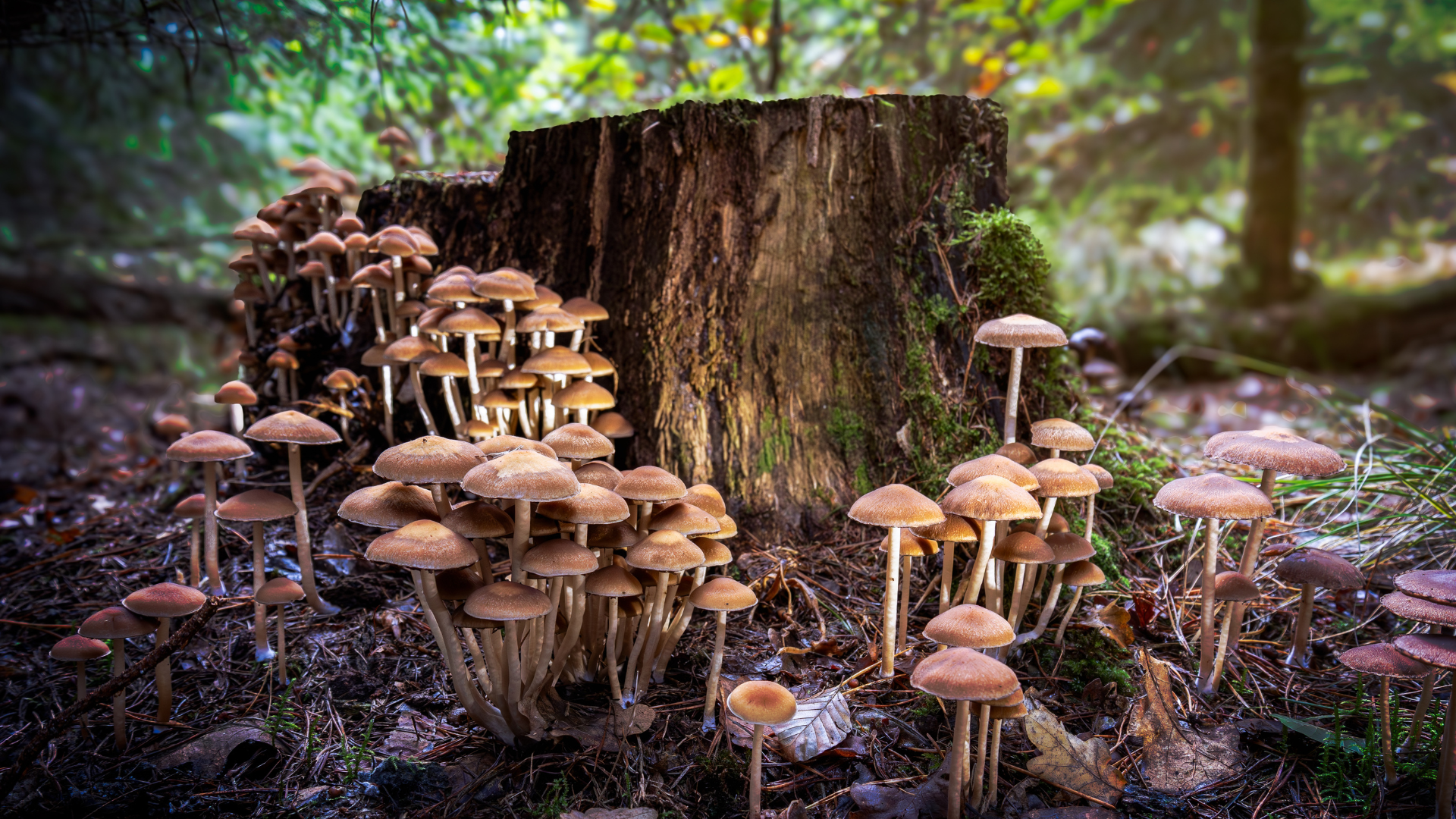
We see this pattern reflected in the natural world, too. In forests, the mycelium network connects trees beneath the surface—sharing nutrients, sending signals, supporting one another in times of stress.

In ecosystems, where survival depends not only on strength, but on relationships.

We see it in human communities as well. In times of crisis or natural disaster, people come together—sharing what they have, supporting one another, responding to immediate need. Something instinctive emerges.

We are not only crew with one another. We are also being held. By air, water, soil, and the intricate systems that sustain life—many of which we are only beginning to understand.

When we begin to feel this—not as concept, but as experience—something shifts.

We are not alone. And we are not separate. We belong to this same living system that sustains life.

Ethical Grounding is a path to strengthening this innate way of being.

Not as an idea—but as practice.

It asks us to build capacity.

To seek out spaces where we can learn to listen more deeply.
To attune to our own nervous systems and the presence of others.
To be in conversation without escalating.
To remain present when things are not easy.

It asks us to find and create community. Not only in moments of ease, but as a resource for navigating complexity together.

Because we are not meant to do this alone. In times of uncertainty, it can feel as though we are moving further apart. But these are also the moments that call us to remember:

There is no “other place.” No separate group untouched by what unfolds here. There is only this.

This Earth.
This shared life.

And the quiet truth that emerges: We belong to one another.

Planet Earth… you are a crew.

With care,
Robin

When the World Enters the Body

Trigger warning: If you feel activated as you read this, please pause for a moment. Feel your feet on the ground. Take one slow breath. Let yourself remember, nothing needs to be resolved right now—you are here. You have choice, and you don’t have to hold the whole world in this moment.

~~~~~~~~~~~~~~~~~~~~~~~~~~~~~~~~~~~~~~~~~~~~~~~~~~~~~~~~~~~~~~~~~~~~

There are moments when something happens in the wider world… and it doesn’t stay “out there.”

It lands in the body.

A headline.
A statement.
Words that carry threat, finality, or destruction.

This happened to me last night when I heard the words “a whole civilization will die tonight.” I felt my body respond immediately.

And suddenly—something ancient was activated.

My breath tightened. My chest constricted. And my mind could not simply “move on.”

There were tears. A lot of tears. And a deep sense of fear.

This was not weakness. This was not overreaction. This is the nervous system doing what it has always done— responding to perceived threat.

When It Touches Something Deeper

As I stayed with the experience, I began to sense that my response was not only about the present moment.

It felt older. Deeper. As if something in me recognized the language of annihilation… in a way that went beyond my personal life.

And I realized: For many of us, moments like this can touch into deeper layers—including ancestral memory.

Histories of loss. Of displacement. Of violence that lives not only in story…but in the body.

We may not always consciously connect these threads.

But the body remembers.

And when something in the present echoes those patterns—the response can feel immediate, overwhelming, and hard to release.

There is nothing wrong in this.

This is part of being human…and part of being connected to others and to those who came before us.

We are living in a time where this kind of response is increasingly understood.

During periods of collective stress—such as the pandemic or times of political instability—there have been measurable increases in anxiety, emotional distress, and calls to crisis support lines.

So when something lands in your body this way… you are not imagining it.

Your nervous system is responding to conditions that many others are feeling as well.

And for many of us, these moments reach deeper. They touch personal history. Collective memory. Ancestral imprints.

So when something is said that carries the weight of collapse or annihilation…the body responds as if it is immediate.

Because in some ways… it is.

When We Get Stuck in the Loop

Sometimes, when something lands strongly…we don’t just feel it—we get caught inside it.

The mind tries to make sense of it. Going over it again and again. Searching for clarity. Trying to resolve the urgency we feel.

There can be a stream of:

“Yes, but…”
“What if…”
“This means…”

Even with awareness… even with practice…it can be difficult to step out.

This, too, is part of the nervous system’s attempt to protect.

But there is often a point where thinking no longer brings relief. And we are invited—gently—back into the body.

Finding Something to Hold Onto

In moments like this, we often need something real to reach for. Not an idea. But something that lives in the body.

For me, in that moment…what came was not quite a solution—but rather linking back to an inner sense of knowing.

I had just been with my granddaughter earlier in the day. Holding her small, precious body and attuning to her. Feeling the instinct to keep her safe…to support her parents…to help create a space of steadiness and care.

And from that, something formed in me:

I will be a steady, loving presence no matter what life brings.

Not because it removed uncertainty…but because it gave me a way of being inside it.

There was a quiet clarity:

I love them so much.
I cannot control everything. Yet I can still be a source of steadiness and care.

And slowly, I began to see more clearly…What actually protects them is not control of global events. But something closer. More immediate. More human.

  • Emotional safety in relationship

  • A model of resilience

  • A grandmother who can feel deeply and return to steadiness

  • A sense that even when things are hard, they are not alone

This is real protection. Not perfect. Not absolute. But profoundly meaningful. And from here, something in my body began to settle. Not all at once. But enough.

From Personal to Collective

What became clear is that this instinct is not only personal.

The way we care for a child…create safety…stay present…is not separate from how we care for one another in community. This capacity already exists within us. But it is not a one-time realization. It is something we need to strengthen.

Building Resilience

Moments of activation will come. The question is not how to avoid them. But how we learn to meet them. With awareness. With support. With connection.

Sometimes we can do this on our own.

And sometimes we need others.

Someone to listen.
Someone to help us settle. Someone who can stay present when we feel overwhelmed.

There is no weakness in this. This is how resilience is built. Not in isolation—but in relationship.

Staying Present Without Turning Away

There is another pattern many of us recognize.

At times, when intensity is high…we turn away.

We return to what feels manageable. To daily life. To a sense of safety we have come to rely on.

This, too, is human.

But sometimes, turning away becomes disconnection.

Where concern does not become engagement.
Where awareness does not become participation.

Ethical Grounding is not about forcing action.

But it does ask something of us.

To stay connected enough that when the moment comes… we can respond. Not from urgency alone. And not from avoidance. But from presence.

A Brief Practice

Pause.

Feel your feet on the ground.

Take one slow breath.

Notice what is here in your body.

Not the story—the sensation.

And gently name it: “Fear is here.”…“Tension is here.” …“Uncertainty is here.”

Let the naming be enough.

Closing

If you are finding yourself overwhelmed… you are not alone. Nothing has gone wrong in you.

Something in you is responding to a world that can be, at times, overwhelming.

The invitation is not to harden. But to stay connected.To yourself. To others. To what is still steady, even now.

And to remember:

There are many of us…learning how to be here together.

With care, Robin 🌿

From Outrage to Creative Response- Part Three

There is a feeling many people are carrying right now… and a quiet question beneath it: what is mine to tend?

It shows up in different ways—frustration, grief, anger, fatigue. Sometimes it is quiet. Sometimes it rises quickly. Often, it comes with a sense of not knowing what to do with it.

We might call it outrage. Or concern. Or simply a deep recognition that something is not right.

This feeling is not a problem.

It is a signal.

What Outrage Is Pointing To

Outrage often arises when something we value is being threatened or violated.

Care for human life.
Care for fairness.
Care for truth, for land, for the well-being of future generations.

When these values are strained—through conflict, through division, through systems that feel misaligned—our response is not indifference. It is activation.

The challenge is not that we feel this. The challenge is what happens next.

From Reaction to Response

Without grounding, outrage can quickly become:

  • blame

  • polarization

  • exhaustion

  • a sense of helplessness

We see this in public discourse, in media, and sometimes in our own conversations. But when outrage is held with awareness—when it is met with breath, with embodiment, with reflection—it can become something else. It can become clarity.

A clearer sense of what matters.
A deeper connection to our values.
A more grounded understanding of where we might place our attention and energy.

Right-Sized Action

One reason people feel overwhelmed is the scale of what we face.

Global conflict.
Large systems.
Entrenched patterns.

It can feel as though nothing we do will make a difference. But meaningful action does not begin at the global level. It begins where we are.

In our communities.
In our relationships.
In the choices available to us each day.

Right-sized action might look like:

  • supporting local farms and businesses

  • participating in community dialogue with respect and curiosity

  • staying informed without becoming consumed

  • caring for our own nervous systems so we can stay engaged over time

These actions may seem small. But they are not insignificant. They are how resilience is built—steadily, collectively, over time.

Community as the Ground of Change

In a small town, we are closer to one another than we sometimes realize.

We share spaces.
We cross paths.
We depend on many of the same systems and relationships.

This proximity is not a limitation. It is a strength.

Because change does not only happen through large institutions.

It happens through:

  • how we speak with one another

  • how we support local efforts

  • how we show up in moments of tension

  • how we choose to remain in relationship, even when it is not easy

Leadership in Everyday Life

When leadership at larger levels feels fragmented or divisive, it becomes even more meaningful to consider how we lead in our own lives.

Not through authority—but through presence.

Through the tone we set.
The care we bring.
The steadiness we cultivate.

This is not about being perfect or always knowing the right thing to say or do.

It is about practicing:

  • listening before reacting

  • choosing connection over escalation

  • allowing space for complexity without withdrawing

This kind of leadership is often quiet.

But it is deeply influential.

Closing

In Part 1, we considered how we stay grounded; in Part 2, what is possible; and in Part 3, what is ours to do?

The answer may not be large or immediate.

It may begin with something simple:

A conversation.
A choice.
A moment of pause instead of reaction.
A step toward supporting what we value.

Outrage does not have to lead to division. It can become a source of clarity, a catalyst for connection,
and a guide toward the kind of community we want to help shape.

We begin where we are.

And from there, something new—quietly, steadily—can grow.

From Fragility to Resilience: What Is Being Revealed- Part Two

There are moments when disruption reveals what stability has been quietly holding in place.

The war unfolding in Iran is one such moment. While it is, first and foremost, a human and geopolitical crisis, it is also exposing something many of us rarely see clearly: how deeply our daily lives are tied to distant systems we do not control.

Energy. Transportation. Food.

Systems that stretch across continents may seem efficient in times of ease, but are fragile in times of disruption.

When these systems are strained, we begin to feel it in subtle and not-so-subtle ways:

  • rising costs

  • supply uncertainty

  • shifts in availability

  • a general sense of instability

And beneath these surface impacts, something deeper becomes visible.

The Hidden Structure

Much of our modern way of life is built on centralization. Large-scale production. Long-distance distribution. Heavy reliance on fossil fuels and complex logistics.

These systems have allowed for convenience and scale. But they have also created distance: between people and the sources of their food, between communities and the land that sustains them, between cause and consequence.

When disruption occurs—whether through war, climate events, pandemics, or economic shifts—that distance becomes vulnerability.

What Has Been Living at the Edges

For decades, there have been other ways of living and working with the land. Often quieter. Less visible. Sometimes dismissed as impractical or niche. And yet, they have persisted.

  • Small farms rooted in place.

  • Community-supported agriculture.

  • Food hubs connecting local growers to local needs.

  • Regenerative practices that build soil rather than deplete it.

  • Indigenous and traditional ways of relating to land through reciprocity rather than extraction.

These approaches are not new. In many ways, they are remembered.

And in times of disruption, they begin to feel less like alternatives—and more like foundations.

A Turning Toward the Local

As global systems strain, the importance of local resilience becomes clearer. Not as a rejection of the wider world, but as a rebalancing.

A remembering that communities are strengthened when they:

  • know where their food comes from

  • support those who grow and produce locally

  • build relationships that are not dependent on distant systems alone

This is not only about sustainability. It is about stability. About relationship. About a different kind of security—one rooted in connection rather than scale.

What This Requires

For these ways of living to move from the margins toward the center, something more is needed.

Not only individual choice—but collective support.

  • Leadership that recognizes the value of local systems.

  • Funding that supports small-scale and regenerative practices.

  • Policies that make it viable, not just an ideal, to farm and produce in ways that sustain both land and community.

And just as importantly: A cultural shift. One that values:

  • quality over convenience

  • relationship over anonymity

  • long-term care over short-term gain

A Quiet Opportunity

Moments of disruption are often framed only in terms of loss.

And there is loss. Real and significant. But there is also the possibility of reorientation.

  • Of seeing more clearly what is not working.

  • Of recognizing what has been overlooked.

  • Of choosing—individually and collectively—to support what is life-giving.

This does not happen automatically. It requires attention. Participation. And a willingness to shift, even in small ways.

Bringing It Home

In a place like ours in Northeast CT, this is not abstract.

We are already connected to local farms. To growers, makers, and small systems that sustain daily life in ways that are often invisible until we look more closely.

Supporting these systems may look simple:

  • choosing local when possible

  • participating in community food networks

  • getting to know the people behind what we consume

But these small acts are not insignificant. They are part of how resilience is built.

Closing

When we ask ourselves how we can stay grounded in times of disruption, the next question reveals what do we see. Not only what is fragile—but what is possible.

We may not be able to change global systems overnight. But we can begin to strengthen the ground beneath our feet. By turning, even slightly, toward what is local, relational, and sustaining.

And by recognizing that the seeds of a different way of living are not somewhere far away—they are already here, waiting for our attention, our support, and our care.

Ethical Grounding in Unsteady Times - Part One

There are moments when the world feels closer than it should.

Not only geographically, but inwardly.

In the body. In the nervous system. In the quiet spaces of daily life.

Lately, I have felt this in a very real way.

Watching the unfolding war in Iran, alongside the increasingly divisive tone of our political discourse—across parties, across institutions—I have found myself both concerned and unsettled. Public conversations that might once have held the possibility of thoughtful exchange now often feel reactive, adversarial, and, often, ungrounded.

Even spaces meant for leadership and inquiry—hearings, public forums, media—can feel more like arenas of opposition than places of shared responsibility.

And beneath all of this, there is something deeper.

A growing awareness that many of the systems shaping our world—political, economic, even cultural—are built on patterns of dominance, competition, and extraction that are no longer sustainable.

War does not arise in isolation. It emerges from conditions—historical, relational, systemic—that we are all, in some way, connected to.

And so the question becomes not only what is happening, but how we are meeting what is happening.

What This Stirred in Me

I noticed in myself a familiar pull.

To tighten.
To form conclusions quickly.
To feel frustration at leadership, at systems, at the seeming inability to come together in ways that are constructive and humane.

And alongside that… another awareness.

That if I move from that place of tension, reactivity, I am participating in the very patterns I am concerned about.

This is where Ethical Grounding becomes not just an idea—but a practice.

Grounding Is Not Turning Away

To stay grounded is not to ignore what is happening.
It is not to soften reality into something more comfortable.

It is to stay connected.

To the body.To breath.
To a deeper layer of awareness that allows us to respond rather than react.

Because what I am seeing, both globally and locally, is not only disagreement. It is dysregulation.

Conversations that escalate quickly.
Positions that harden.
A loss of the ability to stay present with complexity.

And this is not just “out there.” It lives in our own nervous systems as well.

The Body as Threshold

When I feel this activation, I notice it physically.

A tightening in my chest and stomach. A sense of urgency. A pull toward certainty. These are the signals.

They tell me that my system is moving into protection—into fight or flight. And this is the moment that matters most.

If I can pause—even for a breath—and feel my feet on the ground…

if I can widen my awareness just enough to include my body, my surroundings, this present moment… then something shifts.

I am no longer being carried entirely by reaction.

I have a choice.

Staying Human in a Time of Fragmentation

What we are witnessing right now, globally and culturally, is, in many ways, a fragmentation.

Of dialogue. Of trust. Of our ability to stay in relationship with difference.

And yet, beneath that fragmentation, something else is also present.

A longing—for coherence, for integrity, for ways of being together that are not rooted in domination or division.

Ethical grounding is one way we begin to respond to that longing.

Not by fixing everything at once. But by how we show up—in conversation, in community, in ourselves.

A Different Kind of Strength

It may not look like strength in the conventional sense. It is quieter.

It looks like:

  • pausing before reacting

  • listening without immediately opposing

  • holding concern without hardening into blame

  • staying present when it would be easier to withdraw

This kind of strength does not ignore injustice or complexity.

It simply refuses to replicate the patterns that perpetuate them.

Closing

I don’t believe we are being asked to have all the answers right now.

But I do believe we are being asked to pay attention.

To notice how we are shaped by what we are witnessing.
To recognize the ways we are pulled toward reactivity.
And to gently, steadily return—to presence, to embodiment, to relationship.

We can begin, simply:

By staying grounded and embodied.
By remembering our shared humanity—even when it feels strained.
And by choosing, again and again, to meet this moment not only with concern…but with care.

A Steady Place to Stand

We are living in a time when the pace and intensity of events can feel overwhelming. Decisions made in distant rooms ripple outward into the lives of millions. Information travels quickly, often faster than our capacity to absorb it. Stories of conflict, injustice, and uncertainty surface daily, touching our hearts and nervous systems in ways we may not immediately notice.

Many people feel this pressure in subtle ways — a tightening in the chest, restless sleep, a sense of vigilance or fatigue. Others feel the pull to respond, to speak, to act, yet also sense how quickly engagement can slide into exhaustion.

In moments like these, I return to a quieter and more enduring question:

How do we remain human under pressure?

This space — Ethical Grounding — is my response to that question.

It is not a place for constant commentary. It is not meant to track every development or offer quick opinions. The world already provides more noise than most of us can metabolize.

Instead, this series offers something different: a steady place to orient ourselves when collective events become intense or morally complex.

The word ethical comes from the Greek ethos, meaning character or way of being. Ethics invites us to consider how our actions affect others, how power is used, and how dignity is preserved even in difficult circumstances.

To practice ethical grounding is to stay in conscious relationship with these questions. It means remaining attentive to human dignity, acknowledging the realities of power and responsibility, and choosing responses that align with care and integrity whenever possible.

I often think of a story shared by the Vietnamese Zen teacher Thích Nhất Hạnh.

During the Vietnam War, many people fled by boat across dangerous waters. Pirates sometimes attacked these small refugee boats, and panic could easily spread among those on board. Thích Nhất Hạnh observed that if everyone panicked, the situation quickly became chaotic and far more dangerous.

But if even one person in the boat remained calm, breathing steadily and not giving way to fear, it changed the entire atmosphere. That calm presence helped others regulate themselves. Clearer decisions could be made. The chances of survival increased.

The calm person in the boat was not ignoring the danger. They were helping the whole boat survive it.

In times of collective stress, we may each be asked — in our own way — to be that person.

Grounding, in this context, is both literal and symbolic. It is the practice of returning to the body, to breath, to the present moment — so that our responses arise from clarity rather than reactivity.

This series will appear here occasionally, especially during moments when public life becomes particularly charged or uncertain. Its intention is simple:

  • to help us remain clear-eyed without hardening

  • to stay engaged without burning out

  • to preserve compassion and discernment even when events test them

If you find yourself feeling stretched by the world right now, you are not alone.

Take a moment, if you like, for a brief pause.

Feel your feet on the floor or the ground beneath you.
Let your shoulders soften slightly.
Take a slow breath in through the nose.
And let the exhale be a little longer than the inhale.

Nothing needs to be solved in this moment.

You are allowed to preserve your steadiness.

Steadiness is not disengagement.
It is part of how we remain capable of wise and humane response over the long arc.

In turbulent waters, the calm person in the boat matters.

This space exists as a reminder of that possibility.

A steady place to stand.