
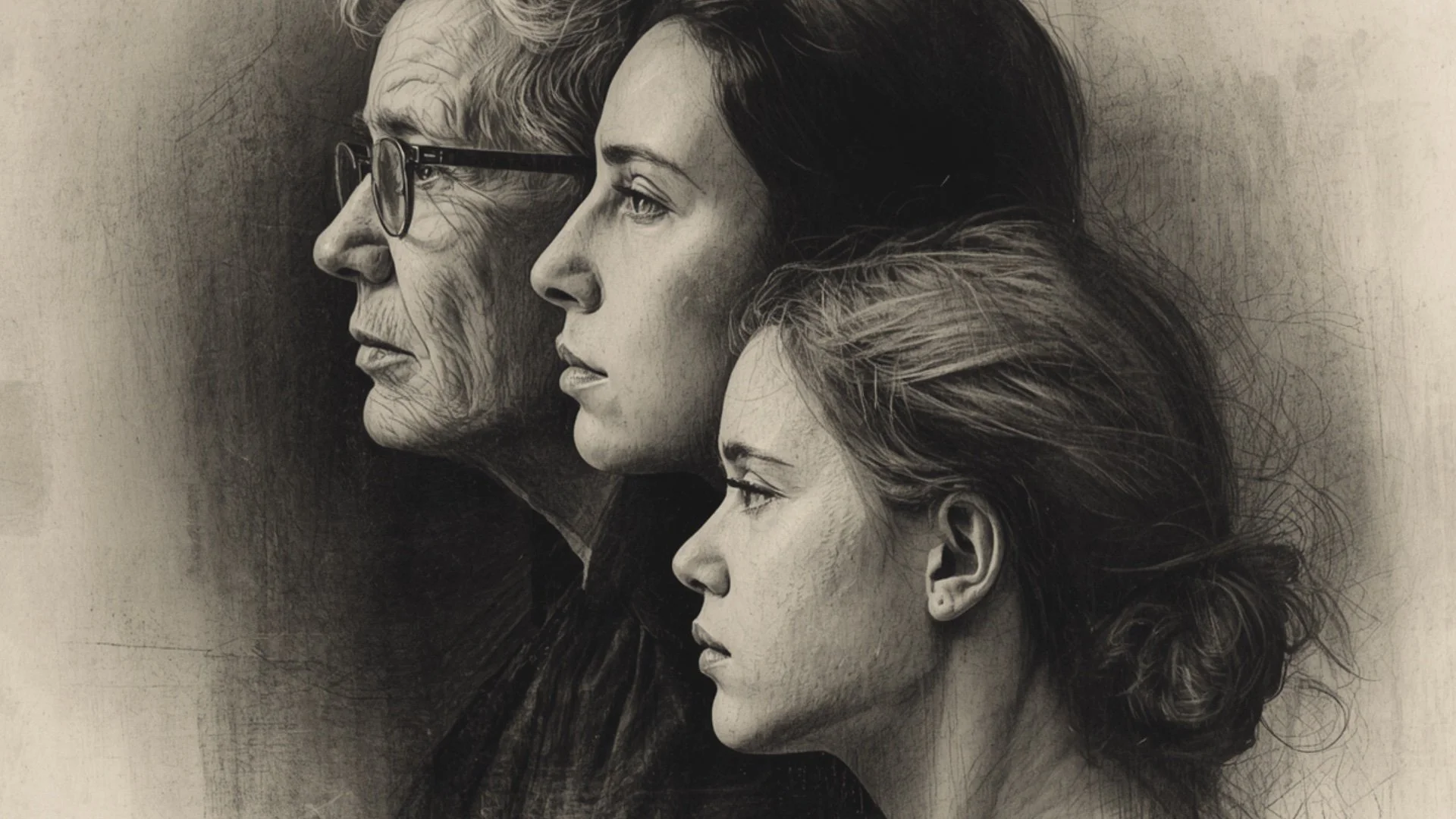
There is a quiet form of loneliness that is becoming more visible. Not always dramatic. Not always spoken.
But felt.
It is the experience of having once been deeply woven into the fabric of life— raising families, building communities, hosting gatherings, contributing, caring—and then, slowly, finding that the structures that once held that connection are no longer there in the same way.
This is not simply about being alone. It is about what happens when the structures that once held connection begin to fall away.
Belonging is not only a feeling—it is something shaped by how we design life together.
Much of the way we have organized modern life has been built around stages and roles.
We move through them:
Child. Student.
Worker.
Parent.
Provider.
And for a time, these roles naturally create connection. They bring us into relationship with others—through school, work, family, shared responsibilities. But over time, something shifts.
Children grow.
Work ends.
Communities disperse.
And what can quietly fall away is not only activity— but the structure that holds relationship itself.
We may still be surrounded by people. Still present in family life. Still contributing in meaningful ways.
And yet…something can feel missing.
Not being needed in the same way.
Not being seen in the same way.
Not being known beyond what we do.
This is a deeper kind of loneliness. Not simply isolation.
But a loss of place within the web of relationship.
I’ve been thinking about other ways of living lately—past and present—where this web is held differently.
Where life is not divided as sharply by age or role. Where children and elders remain in close relationship.
Where value is not tied only to productivity, but to presence, memory, and lived experience. In these ways of living, belonging does not end when a role changes.
It deepens.
Elders are not outside the flow of life. They are part of its continuity.
In our current structures, we are still learning how to hold this. There are many beautiful efforts—community programs, senior centers, gatherings designed to support connection. These are meaningful and important.
And yet, for many, they do not fully meet the deeper need. Because belonging is not only about activity.
It is about relationships that feels alive, mutual, and meaningful.
Perhaps we need to ask new questions.
What would it look like to create spaces that are not separated by age, but shared across generations? Where children and elders are in regular relationship—not as visitors, but as part of everyday life.
What would it look like for places of gathering to become community hubs, where people of different ages and stages bring what they have and receive what they need?
In some parts of the world, we see glimpses of this. Spaces where childcare and elder care are woven together. Where stories, presence, and care move in both directions. Where value is not lost as capacity changes—but simply expressed differently.
These are not large, sweeping solutions. They are small shifts in how we design life together.
They ask us to move from:
separation → toward relationship
function → toward presence
independence → toward interconnection
And they ask something of us, personally. To notice where we can remain in relationship, rather than withdraw.
To take time to truly see one another—not only for what we do, but for who we are. To create, even in small ways, spaces where connection is ongoing, not occasional.
This is not always easy.
Our lives are busy. Our systems are structured in certain ways. And change takes time.
But something in us already knows the direction. We feel it in moments of real connection.
In conversations that go a little deeper. In time spent across generations. In the quiet recognition of shared humanity.
And we feel it in the absence, too. In the places where something important is missing.
Ethical Grounding invites us to stay with this awareness.
Not to rush to fix it.
But to begin to see clearly:
What sustains belonging?
What allows relationship to continue across time?
What helps us remain part of the human and living world, even as life changes?
We may not yet have fully formed answers. But we are beginning to imagine them.
And perhaps this is where something new begins. Not in large systems alone— but in the small, intentional ways we choose to stay connected.
To ourselves. To one another. To the web of life that holds us.
I saw this in my own life as I cared for my mother. There was a longing she carried— for connection, for presence, for her grandchildren to visit more often. And I knew… they loved her. But love, on its own, did not always become presence.
Something in the structure of our lives made that love harder to live out in the ways she needed. There was a quiet grief she held— a sense of losing her place, even while still surrounded by family.
Perhaps many of us are now standing in this in-between place— learning from what we witnessed in our parents, and wondering how it might be different for us.
What would it look like to stay in relationship across time— not only in love, but in presence?
Because belonging is not something we grow out of. It is something we learn how to carry— together.
With care,
Robin 🌿